
Goodbye, Forough
We had a good run, didn’t we?

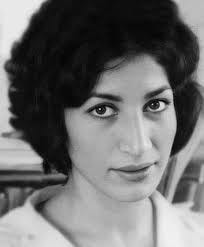
I was a teenager when I discovered the poetry of Forough Farrokhzad. In spite of my family being full of poets, scholars and literati, that kind of poetry was not to be discussed. Our meeting was inevitable, as it is for any other Iranian girl-child, suffering from a fever of the letters.
Soon, we became careful, timid acquaintances, and then, gradually, nighttime companions. I committed her verses to memory, much like I had committed hundreds of couplets by the classical giants of our canon, and many individual poems of the “she’r-e no” and “she’r-e sepid” movements. Except, I liked her more. She spoke to my teenage rebellion, my budding relationship to my own physicality, my feverish longing for love. I learned „The wind-up doll” by heart, early on, and it came to me, semi-involuntarily, as a sort of unspoken mantra during arguments with my parents that are, naturally, completely normal for that age.
I would feel so vindicated in my pathetic, petulant irritation, reciting:
“Whatever the equation, one can always be a zero,
yielding nothing, whether added, subtracted, or multiplied.
One can think your eyes are buttons from an old ragged shoe
caught in a web of anger.
One can evaporate like water from one’s own gutter.” (translated by Sholeh Wolpé)
Naturally, silently, in my mind.
I told nobody about my love of her verse. It was indecent. She was the woman who wrote: „I have sinned a rapturous sin… “after all. You don’t quote that kind of woman to your dad.
Especially not as a teenager. Though, I did recently, as a joke, and my father participated in it and wasn’t mortified, so perhaps I overcorrected there. But my pushing-30 self is not my 16-year-old self.
Even later, in my long nights in emigration, as a disoriented youngster, I often read her aloud, to my open window. I’d smoke a cigarette for her, and for Jacqueline du Pré in the same breath, and considered them my guardian angels, though I never particularly believed in an afterlife. Poe remarked, a long time ago, that: “The death of a beautiful woman is, unquestionably, the most poetical topic in the world.” And when the woman is talented, and eternally young, well… you have a ready-made poltergeist that haunts generations. It took me years to recognize that the West had already prepared an archetype for her, and we dutifully retrofit her into it.
This is all to say, dear reader, that she meant a great deal to me. That she was really, very formative and important. I, of course, knew of other female poets in our language, but none of them quite stuck with me at that age. It was around that time where I’d finally start reading Anna Akhmatova in the original. Akhmatova was an entire generation older than Farrokhzad, yet they died less than a year apart. I started realizing what an injustice had been done to Akhmatova’s verse in translation, and read everything and anything I could find. As the new love affair grew stronger, the old one started to show cracks.
One thing I noticed early on is that… in the West, Farrokhzad is not nearly as unknown as other Iranian female poets. Even the great, the unmatched Parvin Etesami is completely obscured. But Forough? She’s present. Really erudite Westerners have encountered her, mostly through masterful Sholeh Wolpé’s translations or “The House is Black”. And it is a kind of rare circumstance where…. The translation is as good as the original? When I read her in English, it felt like someone had switched on a fluorescent light in a room I had only ever seen by candle flame, a sight that totally contradicted my experience with Akhmatova. Farrokhzad was comparatively lyrically unscathed, or – dare I say – improved.
Beneath this is a pair of terrifying revelations. First of all, that the original is really not technically solid at all. Even the famous excerpts. Consider this example, from “Friday”:
جمعهٔ ساکت
جمعهٔ متروک
جمعهٔ چون کوچههای کهنه، غمانگیز
جمعهٔ اندیشههای تنبل بیمار
جمعهٔ خمیازههای موذی کشدار
جمعهٔ بی انتظار
جمعهٔ تسلیم
“Silent Friday.
Desolate Friday.
Friday dreary as decrepit alleys.
Friday of ill lazy thoughts.
Cunning-wide-yawns Friday.
No-anticipations Friday.
Friday of surrenders.” (Translated by Sholeh Wolpé)
As you can see, even with the ellipses, even with every possible intervention of Wolpé’s… it’s hollow, juvenile. Now, as with any output, there are flashes of genius. But between those flashes? The marks of an artistic character who had a lot of confidence that sadly wasn’t always earned.
The second unpleasant realization is, that the essence of the original can be digested, emotionally and ideologically, when filtered through a neutral language lens and a sort of translator’s Occam’s razor approach, without losing much. Which is never a particularly promising sign. It was a painful discovery, the kind that feels like betrayal; not only of her, but of my younger self who needed her.
I had to find the translation to explain Forough to my international friends, while still quite taken with her. I found the Wolpé translation, and it killed Forough for me. Not because the translation was poor, no, on the contrary. Because it exposed the vacuousness of the original. Because the original is a highly uneven artistic output, but never particularly deep or linguistically interesting. It’s easy poetry. Easy to read, easy to digest, easy to be scandalized by.
Farrokhzad is no Bella Akhmadulina. She is not Metakse Poghosian. Neither is she Vesna Parun.
Farrokhzad is… Farrokhzad. And that is totally enough when you’re a 16-year-old Iranian girl marveling at your changed body, the unnatural constraints of society and the feverish desire to feel whatever there is to experience. Back in my days of enchantment, I did not yet understand how eagerly the West welcomes a certain kind of Eastern woman: tragic, sensual, ungoverned and legible in translation in all the ways that our more complex women often are not
Once you’re a little older and more burnt, and especially when you see her refracted through an emotionally neutral lens, you understand… there isn’t really all that much there once you strip the layer of social taboo.
As a teenager, and one that came from an erudite background, certain material mechanics of Forough-as-phenomenon were entirely invisible to me. As I became a young adult in conditions of extreme economic precarity and displacement, a sort of all-encompassing historical materialism started haunting me. This was my nascent class consciousness. In Iran, I would have been privileged among the subaltern, at least to some extent. In the West, I was on the very bottom of the totem pole. The libidinous musings of aristocrats and military brats started implicitly irking me, like a stone in a shoe, gradually becoming intolerable enough to examine clearly.
The truth is simple: every great cultural phenomenon rests on material preconditions. Forough Farrokhzad, the inimitable, the beloved, the revered, is no exception to the rule. She was born in 1934 to a wealthy, well-connected military family. Her father was a colonel, no small achievement in the Imperial system. Young Forough was given an education, and access to literary circles, publishing, the artistic life. She had the sympathies (some covert, some very much overt) of modernizing male intellectuals. In her case, several factors converged: talent, wealth, connections, timing. In the 1950s and 1960s, after the shocks of the internal cultural crisis, a sort of cultural revolution was brewing. Iran was rapidly modernizing, and for all its failings, the Imperial system did inadvertently produce a magnificent, dizzying acceleration in cultural production. But this cultural revolution was decidedly urban, and wealthy. It was a boom that concerned Tehran north of the Grand Bazaar. Rural development lagged behind, illiteracy among women remained relatively high. Had Forough been the daughter of a pistachio farmer from Kerman, a fisher from Hormozgan or a shepherd from Sistan, nobody would’ve ever heard her name. Even if such a girl were to become the greatest talent in all contemporary Iranian literary production, the material conditions to allow her into the north-Tehran club would be missing.
And this was nothing new.
Parvin Etesami, born three decades before Forough in the tail end of the Qajar era… was a member of the hezar famil clan, a granddaughter of Mostowfi ol-Mamalek, and by extension, even related to the Mossaddegh family. She was an old-time aristocrat, from an aristocracy that predated the Qajar and even Zand dynasties! So, from this we can quite clearly conclude, that in the Iranian context, if one wishes to be a female poet, one must have some very, very, very well-connected relatives. Both women had that necessary precondition.
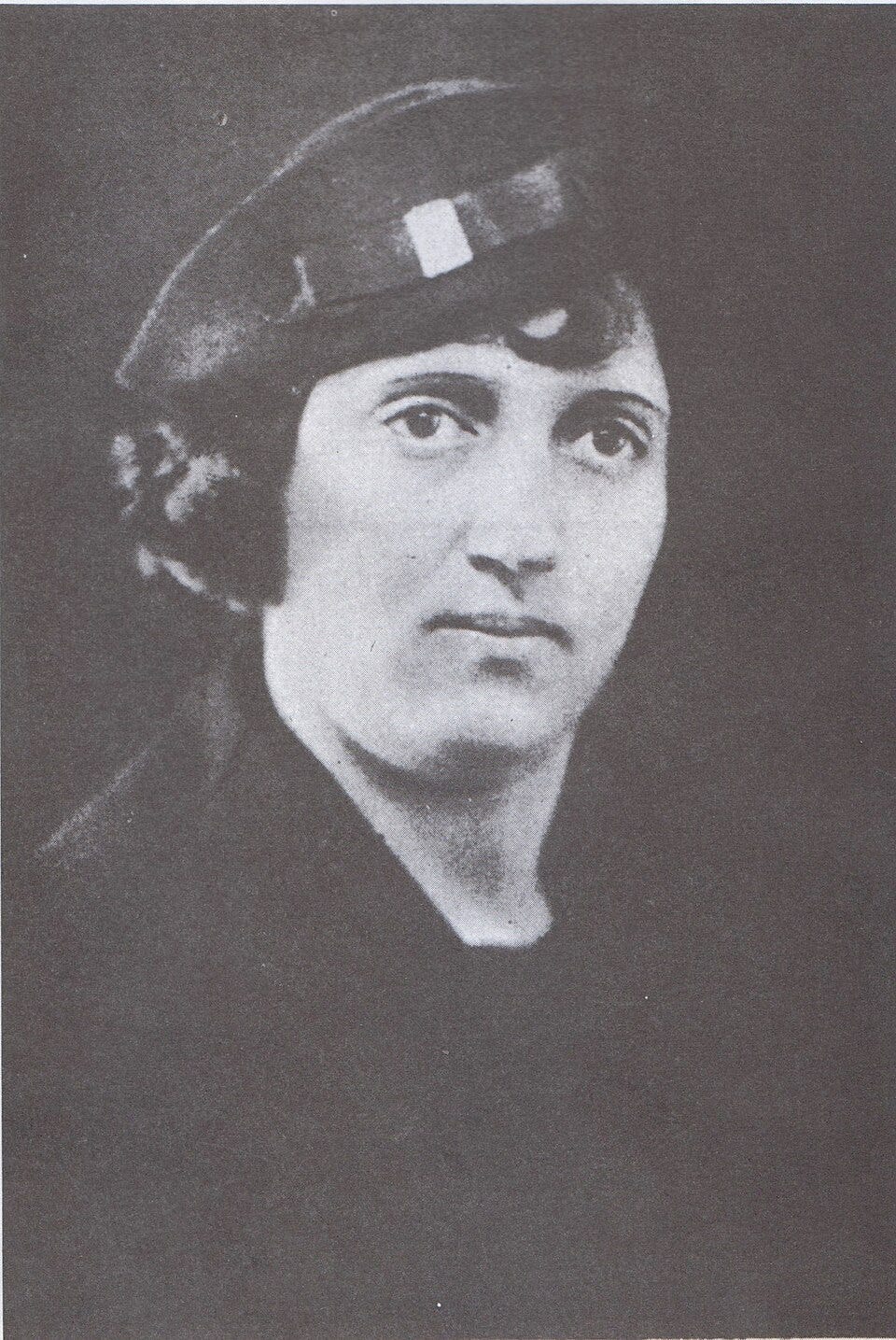
But Parvin Etesami never became a cultural icon quite in the same way as Forough did, although she, too, died young, only 34, and had a scandalously failed arranged marriage to a relative.
It is the timeline difference, the thirty years between them, and a whole world of social upheaval that made Forough’s canonization possible. After divorce, Parvin retreated. She returned to her father’s home, wrote a poem about the nine months she spent as a married woman, and never spoke of or wrote about the episode again.
Her poetry is rich in imagery, deep, and very difficult to adequately translate. It is never lascivious or poking at the edges of propriety of the time. Unlike Forough, who was killed in a car accident, Parvin died of typhoid fever.
Forough, some twenty years after Parvin’s death, lived in a different, less tribal, less rigid society. The modernizing pressures had started trickling down from the intellectual class to the wealthy. She did cause a scandal, and not once, multiple times, but was always shielded from ruination just about enough by her family’s standing and by the changing social climate, that her artistic life could continue. This was not a given. It was an exception, rather than the rule in Iranian society. Divorce still marked women as defective, and an attitude towards intimacy that was as open as Forough’s? It would’ve gotten any woman even slightly below her social status permanently barred from public life.
And that brings us to the myth.
For my generation, it is a given that Farrokhzad is a ghost. One has to stop and wonder about the real possibility that she could’ve been alive today. She would’ve been 91 in just a few short weeks. And Iranian women can be a hardy breed, from my family experience. Had she not been tragically killed right at her prime, she would’ve most certainly lived through the revolution, the Sacred Defense, the eternal slow-motion killing of her countrymen by sanctions. Would she have emigrated? Would she have become more overtly political?
She is a safe ghost, because we can imagine her outside the real historical course of our land, and our lives intertwined with it. She could never politically fail us. She could never get seduced by an ideology that would become despised, or make a politically fatal remark. By virtue of dying early enough, she remains untainted by who she could’ve become. In a politically traumatized society where nobody survived the 1980s without being involuntarily sorted into camps, that purity is therapeutic. And therefore, a perfect tool for political projection.
Indeed, Forough was skeptical of Islamic rites, and family structures, and the order of Iranian social life. That is no secret, it is practically plastered all over her artistic output. And as a beautiful ghost who can’t protest, she can be the vehicle for mass subversion. Her poetry isn’t banned, one can find it and read it, but it is considered distasteful in more conservative circles. Even for girls from such families, she provides an exhaust valve, if they’re brave enough to reach for it. Not Western, not proscribed, not tainted by direct collaboration with the enemy because she was already dead. The forbidden fruit that won’t poison you.
And for the liberal circles, she occupies a sort of cultural position that is beyond any realistic measurement of her actual literary legacy. Because she couldn’t be tainted by becoming more conservative over time (which happened to a large number of former intellectuals), she becomes the original tragic rebel-woman archetype. After oil and saffron, the most illustrious Iranian export product to date. Her historical context is flattened, her output that isn’t racy suppressed in the service of providing the blueprint for what would be infinitely copied and plagiarized imago in the decades to come. Her cherry-picked output is then used to soothe middle-class anxieties, often through further self-orientalisation. My own path with her work was close to this one. Before one becomes consciously aware of the psychopolitical structures at play, of the imagery and tropes one is compelled to fit into as a young Iranian woman, this sort of analysis remains beyond reach.
The Western reception becomes problematic in this context. Surely, if it was Iranian female verse they cared about, Etesami would be the choice with more literary merit. Even in terms of individual martyrdom, Etesami wins. But Etesami never wrote:
“Why should I stop?
I hold to my breasts sheaves of unripe wheat
and give them milk.
Voice, voice, only voice.
The water’s voice, its wish to flow,
the starlight’s voice pouring upon the earth’s female form,
the voice of the egg in the womb congealing into sense,
the clotting together of love’s minds.” (Wolpé)
In essence, Etesami never provided enough erotic charge to make herself politically functional in the Western gaze.
At the risk of repeating myself, none of the mechanistic choices that govern the visibility of Iranian female artistic output are random. Or innocent. If it is visible, it must be functional for the hegemonic powers that still have the full intention to recolonize what was effectively decolonized in 1979. In this sense, Farrokhzad is merely the ur-martyr, the ur-woman-in-need-of-salvation. And the fact that the libidinal drive is so strong and so overemphasized in the reception of her work is damning and extremely indicative of the general forces at play.
This attention is not limited to a handful of scholarly articles or the occasional reprint. It is a flood: exhibitions, retrospective installations, documentaries, theatrical adaptations, experimental films, even musical compositions inspired by her verse… so many projects, so many interpretations, that the sheer volume begins to feel like a kind of possession. One searches for a comparable Iranian literary figure from the twentieth century and comes up empty-handed. No other modern poet has been appropriated, translated, adapted, and consumed with such relentless intensity. Not even Sepehri.
And therein lies the paradox. Forough is everywhere as a symbol, yet almost nowhere as an entity that can be studied and critiqued. Her words are not read so much as they are performed, curated, fetishized, commodified, drooled over. Every new translation, every cinematic or artistic reimagining, filters her through the lens of an expectation: that the East must be tragic, that female rebellion must be beautiful, scandalous, sensual, digestible and served on a platter. Western audiences rarely encounter Forough the poet; instead, they encounter Forough the icon and scandal incarnate. The multiplicity of interpretations, the sheer density of derivative work, is both homage and a cage: a cultural overexposure that ensures she remains legible on the terms of others, rather than hers or ours.
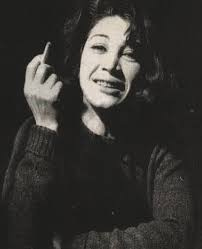
By co-opting the memory of a woman who would’ve been adjacent to the pantheon, but never in it if she had been judged by literary merit, two things are achieved:
First, any doubt about her greatness causes an extremely vitriolic reaction from those who are yet to see the mechanics behind the memory management and proliferation, because you’re effectively touching into a wasp’s nest of internal anxieties, suppressed libidinal drives and self-orientalization.
Second, any attempt to appraise the entirety of her work is derailed by forces that would have her be only “the iconoclast”, and not the mother, the documentary filmmaker, the mystic, the nature poet. Forough who writes about fish is of no political or internally cathartic use to anyone.
Sometimes, I really want to go back to the days when I’d play Du Pré’s Elgar, and read “Let us believe in the dawn of the cold season”. I long for the simple, intoxicating mélange of pleasure and pain induced by bathing in what then seemed like pure, female genius and tragedy.
Once you tread through ammonia, you realize it was never that simple.
Oh, how I wish it were.
I look at our days fondly. I hold no grudges. She was a woman of her time, a child of a transitional period in my land’s history that will forever remain inaccessible to me. I’m grateful for the education and permission in feeling, feeling all sorts of things that one is supposed to keep quiet. I will carry those memories fondly, but for now:
Goodbye, Forough.
We had a good run, didn’t we?
Thank you, Khatoun. I hope I live long enough to gain the skills to truly appreciate Persian poetry. I can read it phonetically and know a few words, but I'm a long way from being able to plum the depths or ascend the heights. I need more lifetimes.
It has certainly been a hot minute since my eyes were treated to the splendid joy of reading a long Khatoun piece.
محترمہ ءِ دکتر, you've produced a feast for the mind once again. I do look forward to reading many more (like perhaps the next piece of the nuclear series?)
Again, sincere thanks for your work! You're a gem.