
On Hate
Reflections from Sarajevo, 2026

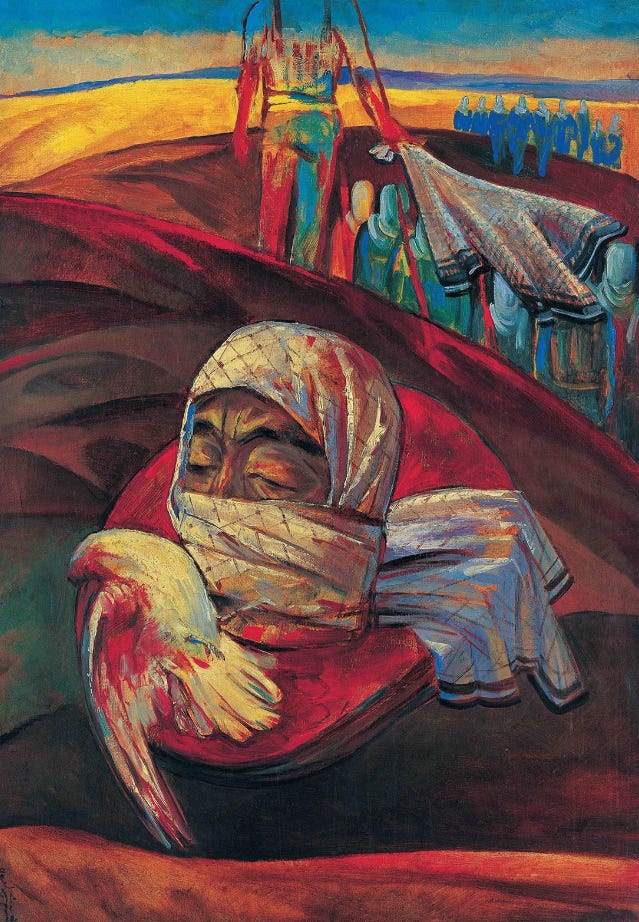
Perhaps you were taught that hatred only hurts the one who hates, like I was. This is a neat maxim, one that makes a lot of sense on the surface. We’ve all experienced hatred in different shades; due to betrayal, injury, injustice or oppression. It is a rather unpleasant emotion, one that is difficult to describe because we instinctively lump together a whole array of states and sensations. No two hatreds are the same. The object of your hatred could be totally oblivious, walking through the world without as much as a faint idea that you’re marinating in these awful, psychological digestive juices, eating yourself from the inside. They just move about their day, while you seethe and suffer.
This happens every day, to most of us. In that sense, this old idea absolutely has some merit. We also know cases from our lives, people whose hatred has consumed them, calcified, and gradually turned them either into monsters or into shadows of themselves. This is a perpetual danger.
Most of us were told to hide our hatred, if we can’t fully suppress it. In western, largely liberal discourse it is an automatic disqualification from polite society if you do as much as admit that you have, at a point in time, experienced the sensation. Hatred is taboo. Due to our lack of vocabulary surrounding the state, the mindspace of hatred, all forms of it get inadvertently confused. Hatred of the oppressed towards their oppressor is just as unacceptable as bigotry. No nuance is allowed. Hatred can be acted upon by the hegemonic powers freely, but never openly stated in words. This creates a strange situation where even approaching the topic laterally feels risqué; for fear of being misconstrued it’s easier to just avoid the subject entirely. We unconsciously submit to the moralizing posture that sees all hatred as pathology and fail to ask ourselves: if this is purely a self-destructive phenomenon, why does it persist? Why is it a mainstay in human nature since its inception? And does it have a place, a function, a reason for being? Is hatred a technology?
Naturally, the story about the person consumed and destroyed by hatred still comes to the forefront, and it is real. I have met such cases many times over my life, in many post-conflict situations. But this story is not the whole story, or the only one; the reality I want to explore with you is darker, more unsettling and sometimes downright horrifying.
What compelled me to write this piece, despite my own struggle with understanding the concept fully? I recently traveled to Sarajevo for work. I’m in there often, and every time I go something new and unexpected opens before me. Unfortunately, the city has become a metaphor itself, but it’s not really sure which metaphor it wants to be. On one hand, there is a persistent glorification of the Ottoman period that I find very difficult to stomach. I’d say that per capita there are more Armenian genocide deniers among Bosnian Muslim intelligentsia than in Turkey. People get comfortable and say what they mean. It is important that it remain a site of Convivencia, a Ladino word chosen to emphasize Sarajevo’s Jewish history. What is also forgotten is that most of that Jewish population ended up deported to Croatian death camps during WWII. And the confusion truly sets in when it wants to be a site of tragedy. This tragedy directly undermines the Convivencia myth, and nobody can resolve it.
Let me just say that I adore Sarajevo. There is something magical about the city, even with all its contradictions. People are genuinely kind and colorful. They have a natural curiosity and warmth that is impossible to find elsewhere. I have tried, and nothing truly compares. There is a humanity to the place, and the way it haphazardly grows into itself, restricted by the surrounding mountains, mirrors how the people keep adding layers of sediment to their identities and political views. Sarajevo is both frozen in time, and in perpetual motion. You feel time passing differently inside it, a very otherworldly experience.
When you spend a bit more time in it, you realize that Sarajevo also wants to represent reconciliation. Except – there is none. The three ethnoreligious groups are largely segregated. The Serbs have mostly left to East Sarajevo, the Croats experienced a migration wave post-2013, when acquiring Croatian citizenship suddenly meant an EU passport and mobility in the EU labor market. You can’t reconcile with people who are no longer in your daily life.
Naturally, the prerogative is to maintain polite neutrality at first, but in Sarajevo the masks slip very quickly. If you sit long enough with people they will inevitably unleash a torrent of trauma, violence and buried pain. It is only the threshold that differs.
And underneath that, something else peeks its head. Hatred. Total, absolute, visceral hatred.
Not in every case, although I’m inclined to say that even those who seem to have transcended the interethnic hatred merely transferred it to more impersonal, larger entities. There was an elderly lady I met, who told me her entire life story. It is not mine to retell, but there were gut-churning details, things that make your blood run cold. She struck me as a saint in her total absence of generalized hatred for any group. And she’d have a perfect reason to hate all of them. But then, just when I canonized her in my head, she told me that she’d have the High Representative, and the entire OHR shot in public, “in the middle of Marijin Dvor”.
The hatred was there. Just moved upwards, to the diplomatic vehicles, to the faceless men who block and make decisions, to the foreign “guardianship” that she perceives as “occupation”. A child of WWII, child of Partisans, having a German with a say in the internal workings of her world struck an older wound. And the old hate was able to override whatever new one could’ve developed.
In another meeting, a lovely man, a very pious Muslim who goes to Turkey for work often, after I asked him about his recent trip to Erzurum, told me unprompted that the Armenians were the same as “Chetniks”, and that they are genetically “this way”, liars and manipulators. He had absorbed Turkish state propaganda, and grafted his own pain onto it. He has not met a single Armenian in his life. He maintains that the “Chetniks” will attack the Muslims again, that it is as inevitable as the sun setting, because they are “genetically this way”. He expects this disaster to happen any day now, for over thirty years. But these things aside, he is a very kind, very lovely gregarious gentleman who would give you the shirt off his back to help out, and a highly intelligent, consummate professional. But you must always mind the gap. This is precisely the horror, that hatred crossing over into bigotry lives in genocide survivors who aren’t overt monsters. It can live in perfectly “normal”, lovely people, and you’d never be the wiser if you don’t strike the right note that unleashes the destructive interference.
There is so much hate, and yet, all the NGOs, all the Endowment for Democracy financed institutions try to convince you, over and over again, that there is actually none. The attempts to temper it, hide it or sublimate it have not been successful. It brews under the surface.
So, having once again participated in these conversations, in these moments when the entire world, and all its complexity collapses into the shape of a single mortal wound, I have started to truly wonder about hatred as such. What is it? How does it grow? Is it one thing, or many? Is it curable? And should it be?
The False Consensus
Let me start with a confession, as per usual. I have hated randomly. Here I don’t mean the simple hatred of betrayal: the lover who lied, the friend who stole and such personal matters, banal or profound. That kind at least has a sort of receipt attached to it. You can point to the date, the hour, the exact sentence that broke things. I mean the other kind of hatred that materializes almost out of thin air before the person even opens their mouth, or very shortly after, without giving them the time to be known.
I had this experience with a random group of American tourists on a street in Sarajevo, on the day Bandar Abbas was struck just recently.
I have hated people simply for being American with the unearned ease in their shoulders, and the excessive volume of their voices. I have hated them knowing nothing about them: not their politics, not their childhood, not whether they cry at funerals or make a decent cup of tea. Nothing. None of that mattered to me at all. The category had already done the work. It is of course easy to rationalize in stupid ways: “if they weren’t a jerk, they wouldn’t be living there/they would’ve renounced their citizenship/they wouldn’t advertise it.” All bullshit post-hoc rationalizations.
This is embarrassing to admit. In European polite society, we are not supposed to say such things. We are supposed to have transcended. We are supposed to judge each person as an individual, to see the light in every soul, to quote freaking Martin Buber while sipping fair-trade coffee. Naturally, these feelings don’t last. Within 15 minutes I had snapped back, and a wave of shame overcame me. Even though initially, upon seeing the American, all I could think was how much this person contributed to the Tomahawk missiles that killed our children, eventually the feeling evaporated.1
This is not an apologia of hatred, but my attempt to simply talk about it. Unfortunately, the English language does a pretty poor job of distinguishing between different types of hatred: its overlaps with rage and contempt are curious and fuzzy. Still, if we are to stay whole in unprecedented times we need to be able to honestly talk about it, because it exists, and it isn’t just one thing. Yes, hatred generalizes and that’s a real danger. But in extremity, the danger of not hating, of failing to act with sufficient violence to stop evil, is greater. This is a tragic choice, never a clear moral victory. And we are at this point right now.
So let us abandon, right now, the comforting fiction that hatred only hurts the hater. Hatred can be kind of like a wrecking ball. Destructive, certainly, but also very effective.
The Anatomy of Hatred
Let me try to take this hatred apart, perhaps it would also warrant a lexical examination because I find that “hate” and “hatred” are such vague umbrella terms that hide a disjointed family of affects. Here I’ll try to dissect it conceptually, in layers that we will try to examine under a microscope, like a histological specimen.
Layer One: Hatred as Collapse of the Particular
Philosophy calls this problem “the problem of universals.” How do we group things? When is a category useful? When does it become a cage?
Hatred loves categories because categories are cheap. A person is expensive in terms of mental labor, because it takes time, attention, the willingness to be surprised to truly know one. A category is free and always available. Hatred says: I do not have the energy for your uniqueness. You will be what I need you to be.
The random American in Baščaršija is not John from Ohio who plants tomatoes and misses his dead mother. The random American is the American. A totally flat, homogenous surface. A target that does not move at all. The British man is not a specific person with a specific biography and personality. He is the Brit. The colonial administrator’s grandson, even if his grandfather worked in a coal mine. The stamp has been applied before the Other gets to open their mouth.
I have also been on the receiving end of this. Walking through European airports, I have watched faces tighten when they see my name. The category arrives before I do. I am not a person with a normal-for-my-culture name and a favorite color and whatever else makes a person. I am the Iranian. The hostage crisis. The nuclear program. The REZHEEEM. I have been hated randomly, efficiently, at first glance. It is not pleasant at all, I can tell you that. But I understand the mechanism because I have used it myself.
This is the uncomfortable symmetry. The hater and the hated are not two different species of human divided by some evolutionary dam. They are mirrors. Both can collapse the other into a category and decide the particular is not worth the effort.
Layer Two: Hatred as Frozen Empathy
Some hatreds have a record attached to them. You loved someone first. Then they broke something irreparably, and the betrayal calcified. The warmth drained out, but the shape of something that was once there remained. This hatred is profoundly sad because it remembers its own opposite, and that makes it run hot. It is the hatred perhaps best described by what happens when passionate marriages go south and culminate in extremely difficult and bloody divorces.
I think that the first layer is more dangerous than the second, because it is practically irrevocable. When hatred is aimed at a person you once loved, it can be bloody. It can be awful. But, and this is perhaps a naïve opinion, I like to believe that there is also the possibility of repair. And if not repair, then simply – indifference.
What I see in Sarajevo, every time I go, is a gravely dangerous transfer between the first and second layer. If there had been no “brotherhood and unity”, if the Yugoslav state had not pushed this narrative framework so powerfully, maybe the rewarmed hatred of the nineties wouldn’t be as vitriolic. Now we see a sort of situation where the layers are porous. Because a category is hated, then every particular individual is hated with Layer Two intensity. And similarly, hating any particular individual with whom you had some sort of transference automatically explodes into category level hatred if the conditions are right. This is such a frightening circumstance, in my opinion, because it becomes a constantly reinforcing loop with no kill switch, and potentially disastrous consequences.
Layer Three: Hatred as Failed Translation
You hate what you cannot assimilate, understand or participate in. Hatred is the tantrum of a mind confronted with a grammar that takes effort to learn. The hater says: you are not a language I speak. You are just worthless noise, and therefore soil everything with your presence.
I have watched this happen in real time. A Dutch acquaintance of mine, otherwise reasonable, cannot speak about Islam without his jaw tightening. You can literally see the dude’s jaw muscles clench. He has never read the Quran or had a real conversation with a practicing Muslim. He avoids the Haagse Markt or Escamp. He simply can’t translate the prayers, the rituals, the way a woman in hijab might feel equally free as his mother with the kort pittig kapsel. So he hates with a subdued rage. Not because he is evil, but because he is lazy, and society affords him the privilege of remaining lazy. This sort of hatred is the lazy person’s hermeneutic.
Layer Four: Hatred as Terrible Intimacy
This one is a bit creepy, even to me.
A sort of hatred that requires sustained, obsessive attention. The hater spends more time with the hated than the lover spends with the beloved. In some particularly possessed cases, the hated is their first thought upon waking, and the last before sleeping. This is a sort of grotesque one-sided marriage.
I have been there once. An academic supervisor seriously wronged me, and I rehearsed conversations with him for months in my head. I built entire monologues, flowcharts for how I’d respond. I knew what he would say, and I knew what I would say back, and I was always more clever, more cutting, more devastating. Verbal Bruce Lee, but only in my head! Meanwhile, he was out living his life and I was in a dark room, fuming, foaming at the mouth, imagining a reckoning that, in the end, never happened. How I hated that poor bastard at the time! And how irrelevant this whole story feels five years later!
But in that moment, this is not even hatred, but already going into possession territory. And the possessed person does not know they are possessed. They think they are simply right.
Layer Five: Hatred as Prosthetic Meaning
When your own life feels thin, random, unjustified hatred offers thickness. A plot or a sort of purpose. The world becomes legible: they are why you suffer.
I have seen this in our diaspora. Iranians in the West who have not set foot in the country for forty years but who can recite every supposed crime of the Islamic Republic as if reading from a freaking Iran International teleprompter. Their hatred of the system has become their entire identity. Without it, they would be just... people. Retired. Bored. Facing the void. So they keep the hatred burning because it is masking how empty and loveless their actual lives are.
I am trying not to mock them, though it is hard not to respond to their hate with hate, because it gets us killed. Hatred gives you a story to live inside, and any story is better than silence. A story has a villain, and a hero, and a plot that moves forward. In every story, you yourself must be the hero, and you have plenty of villains to choose from at any given moment.
It’s easy to fall into this trap too. Many unfortunate events that shaped my life can be traced back to US sanctions and the economic decimation the Iranian middle class experienced as a result. If I squint hard enough, I can find a way to tie in every bad thing that ever happened to me to that reality, but that is obviously absurd. If one does that, they’re no better than the monarchist.
Layer Six: Hatred as Cleanliness
There is a pleasure in hatred that no one admits. The pleasure of purity. Of knowing exactly where your line is. Of having a well defined enemy, and a solid definition of what is beyond the pale.
When you hate someone enough, everything becomes simple. The world is divided into Us and Them, and You are on the right side, and You do not have to wonder at 3 AM whether you are the bad guy, or where the complexity lies, or what the nuance of the situation is. I’ve seen this a lot in revisionist narratives. We like our enemies totally irredeemable, one-dimensional and cartoonishly, purely evil. In reality it is almost never like that, and acknowledging the complexity makes these super pure categories untenable. If you totally collapse the humanity of your enemy, you are above reproach. Always and without fail.
The Paradox of Utility
This is an uncomfortable proposition, but hatred sometimes works.
It is not always useful or clean and never without collateral damage, but still at certain times, it functions. It moves things and changes equations. It has a track record that the one-sided liberal forgiveness industry would prefer you forget.
I was taught the opposite. I was taught that hatred is a cancer, a poison, “a hot piece of coal you hold in your hand”. This is a useful lie because it keeps people docile. It turns the oppressed into therapists, forever asked to manage their own rage so the oppressor doesn’t feel uncomfortable. But it’s still a lie.
Let me take an example that will anger everyone equally.
The Red Army didn’t defeat the Wehrmacht with the power of “love and equality”. I’m fairly sure they didn’t meditate on the shared humanity of Nazi soldiers. They hated. There was a specific, trained, weaponized hatred of the fascist invader who had burned their villages and starved their cities.
Listen to the songs they sang. They’re not gentle or forgiving. Here’s an example of poetry from the time:
“Так убей же немца ты сам,
Так убей же его скорей.
Сколько раз увидишь его,
Столько раз его и убей!”
“So kill the German yourself
So kill him quickly
As many times as you see him
That many times, kill him!”
Konstantin Simonov, Kill Him!, 1942
The Soviet Union did not apologize for teaching its soldiers to hate. It encouraged hatred. Hatred was a weapon and it worked.
Ilya Ehrenburg, the Soviet journalist, wrote a piece in that same 1942 called “Kill the German.” It was not subtle or nuanced at all. It said, explicitly: kill the German, not the Nazi. Because, Ehrenburg argued, the German had allowed Hitler to rise, had benefited from the plunder of Europe, and had looked away while the camps filled. The hatred was total. It was also, in the context of Stalingrad, where the alternative was extinction, effective.
The Red Army soldier who charged with the machine gun was not thinking about reconciliation. That hatred propelled him forward. It made him braver and capable of things that love could never produce, perhaps most importantly the willingness to die so that the fascist would die first.
Does that hatred look beautiful? No. Does it look moral? No. Does it look useful? Ask the survivors of Leningrad. They will not tell you hatred is self-destructive. They will tell you that hatred, when disciplined and aimed, saved their world from something unimaginable.
There are plenty of examples of this nature, and all of them involve violence. Algeria would be an interesting example, because contrasting that struggle and Fanon’s reading of violence as necessary to liberation make the case for the utility of this forward propulsion. Hatred may not be explicitly named, but as humans, I think we can infer what was going on. But then again, the issue arises when it takes a life of its own, beyond its initial liberatory purpose.
So, having said that, let me try to define something.
A technology is a tool that extends human capacity. A hammer extends your arm, a microscope extends your eye, a computer extends your brain etc, etc...
Hatred extends your will in extreme situations when violent rupture is vital. It allows you to do things you could not do otherwise. It allows you to leave a marriage, survive a siege, protect a child, or fight a stronger enemy. It is not the tool you are likely to need to reach for in a well-ordered, boring, domestic life. But realistically a well-ordered life is a luxury most humans have never enjoyed anyways.
The question, then, is not should you hate? The question is: can you use the hatred you already have without being used by it?
This is the same question we ask about any technology. A knife can slice bread or slice throats. Hatred can free you or destroy you. The difference is not in the tool, but in the hand that holds it. The problem with this comparison is, naturally, that a knife doesn’t have a will, and hatred can change you to the point where your motivations aren’t exactly the ones that bred it in the first place. This is where the danger lies, because hatred is propulsive, but it also deforms.
Some of the men I met in Sarajevo didn’t stop, not even after thirty years. Their hatred became kind of like a prosthetic limb. Now they can’t imagine movement, existence or normal life without it. They are not holding the knife, the knife is holding them. In this sense, hatred is a technology with a fatal design flaw: it has no off switch and it rewrites its own user manual in ways you can never predict in advance.
Here is where I end this meditation, for now.
Hatred is not useless. Anyone who tells you otherwise has never been truly desperate, or truly oppressed, or truly afraid. Hatred has a place and a function. It has saved lives and besieged cities.
But hatred is also not safe. Once you learn to hate, you never fully unlearn it. You can try to redirect it or contain it, but you can’t ever fully discard it. It lives in the basement and waits to be reawakened.
The question is not whether you will hate. You certainly will, at some point in your life. The question, for me, is whether, when you open that basement door, you will still recognize your own face in the dark. Whether you will control the technology that allows for violent resistance, or whether you will find yourself deformed by it and rendered unrecognizable.
I love that your so open in exploring all its positives and negatives.
People often describe Algerians as hateful of Europeans. Europeans have an easier time in Algeria. They're considered better looking and treated well- it's the Black people who are hated and suffer, not the Europeans😅when people refer to Algerian antiFrench hatred they are decontextualising the genocidal settler colonialism that Algerians lived through and the dynamic of occupation and apartheid and ethnic cleansing/forcible displacement- Algerians hate white supremacists. That's a decision unlike being white. Forgive me if I misunderstood your point. It's just I've read the anglophone literature on algeria- it's appalling. Many europeans automatically side with the civilised french against the barbaric algerian and accept french propaganda easily. I'll be releasing an article on the genocide that my grandad survived on 5 july. You have a beautiful writing style but this reads a little like depoliticised psychology.